 ProSpin
In this guide
Key takeaways
- 01.They are the ITF stages for young players.
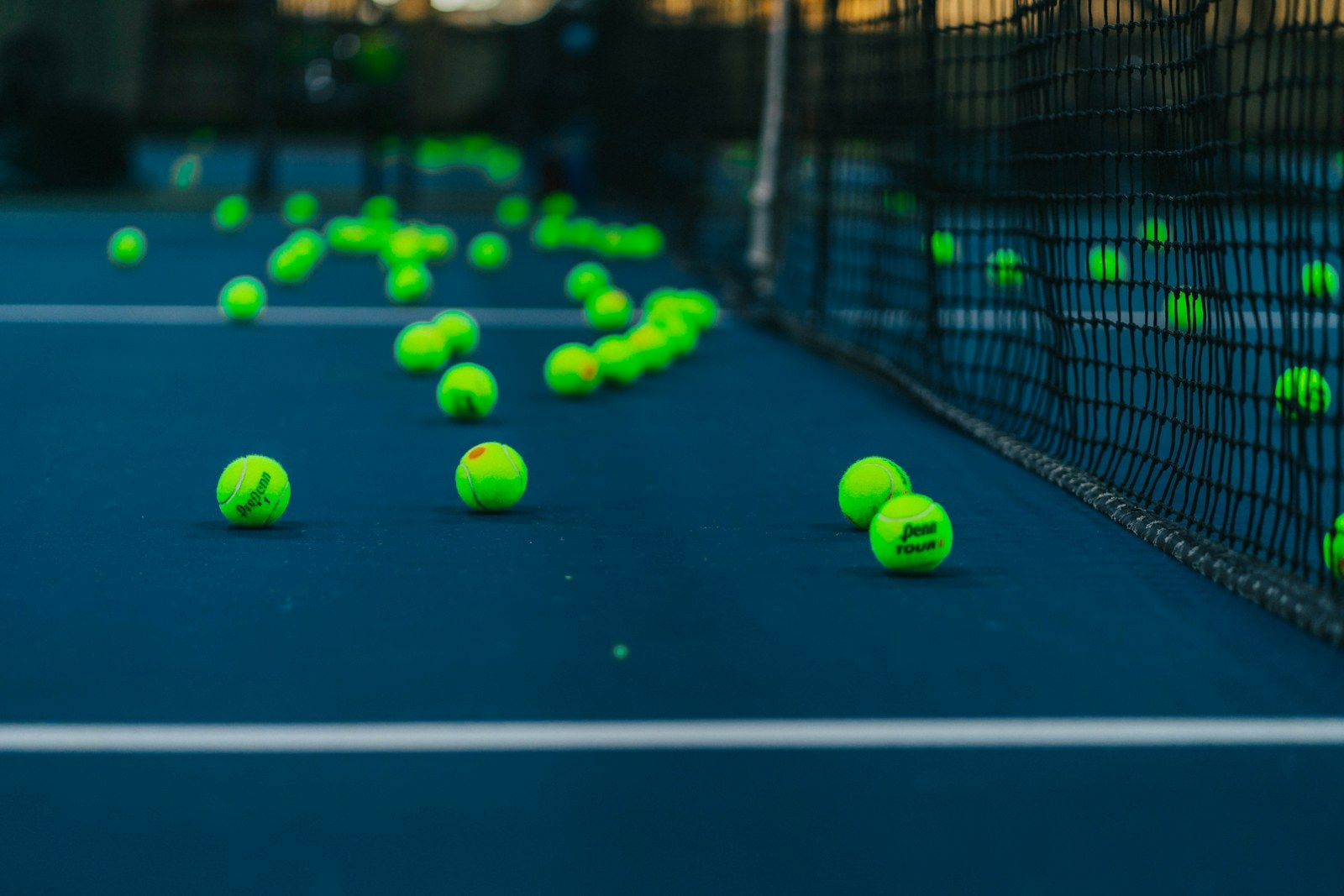
- 02.The red ball is 75% slower on a small court, orange is 50% slower on a bigger court, green is 25% slower on a full court, then players move to the full-speed yellow ball.
The stages at a glance
| Stage | Ball | Court | What they work on |
|---|---|---|---|
| Level 1 | Red ball, 75% slower | Small court | Control, coordination, learning the strokes |
| Level 2 | Orange ball, 50% slower | Bigger court | More playing, building rallies, tracking the ball |
| Level 3 | Green ball, 25% slower | Full-size court | Full-court rallies, consistency |
| Level 4 | Yellow ball, full speed | Full-size court | Fast rallies, tactics, match play |
How players move up
Every player moves up at their own pace, in small groups of 2 to 4 matched to real level. Coaches send monthly star reports on forehand, backhand, serve and volley, so parents see the progress.
Where to learn it
- Baabda: Sagesse Brasilia School. Every day from 4 pm. Close to Hazmieh, Jamhour and Achrafieh.
- Jamhour: Evangelical School (new branch).
- Louaize: Melkart, Louaize (new branch), for families in Zouk Mosbeh and Keserwan.
Questions parents ask
Why not start with a normal yellow ball?
A full-speed ball is too fast and bounces too high for young children. Slower balls let them rally and learn correct technique early.
Which ball will my child start with?
Usually red for young beginners. The coach checks level in the free first session and suggests the right stage.